Unlike Maya writing, about which it is possible to assert that its complete decipherment “is still far from completion and awaits the interpretation of a considerable number of logograms and syllabic signs” (Vepretsky and Davletshin 2020: 11), Nahuatl writing does not abound in undeciphered glyphs, mainly thanks to the extensive colonial practice of glossing indigenous Aztec manuscripts to facilitate their explanation. However, nonetheless, a number of rather interesting undeciphered glyphs still defy epigraphists. In this entry, I will present the decipherment of a hapax glyph that, as the word implies, seemingly only appears in a single colonial document, the Codex Xolotl.
The Codex Xolotl (Figure 1) is undoubtedly a masterpiece among the Texcoco school of codices, as well as the most extensive of the group (Robertson 1959: 141). It is also a particularly rich example of the native genre of cartographic history and, along with its close sister documents, the Quinatzin and the Tlotzin map, it deals with “the main themes of central Mexican community and dynastic histories: the founding, antiquity, and political legitimacy of the altepetl, its ruling house, and its regional alliances” (De Jesús Douglas, 2010: 35). Many modern scholars have dealt with this manuscript since its modern publication by Eugene Boban (1891), but among them, two are foremost: Charles Dibble (1951), who offered a historical commentary along with a facsimile, closely following textual parallels found the work of Fernando de Alva Ixtlilxochitl and other native historians, and Marc Thouvenot (1987), who prepared an extensive hieroglyphic and iconographic analysis of the whole document which has expanded with the years and is now fully accessible in his website, Tlachia (2012). Thanks to the monumental work of these scholars, most of the contents of Codex Xolotl are accessible and understandable to us.
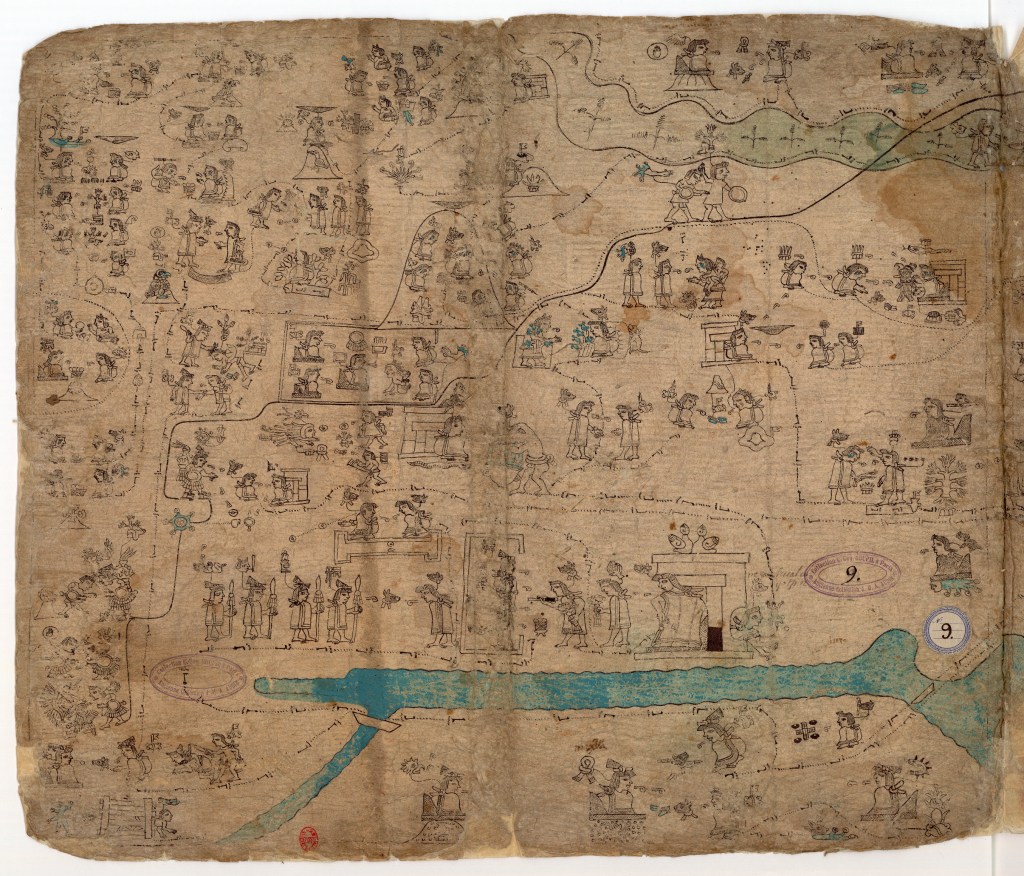
Figure 1. Codex Xolotl, page 9
However, among the less studied areas of this Codex are what we could call “sentence glyphs”. These are glyphs that emerge from speech scrolls associated with different characters, rendering complete sentences in a logosyllabic manner, something unusual for Aztec writing in general. An interpretation of some of the sentence glyphs of Codex Xolotl is offered by Gordon Whittaker in his recent book Deciphering Aztec Hyeroglyphs (2021: 114-121), and the reader is advised to consult his work for some brilliant examples of decipherments. In comparison to Whittaker’s analyses, the example offered here belongs to a rather short sentence; however, it more than makes up for it in account of its obscurity and richness.
The glyph in question appears in pages 9 and 10 of Codex Xolotl, which abound in “sentence glyphs”. These pages deal with “the journeys and adventures of Nezahualcoyotl during the years that he was under the persecution of the Tepanec” (Dibble: 109). Indeed, after killing both Nezahualcoyotl’s father, Ixtlilxochitl (tlatoani of Texcoco) and Chimalpopoca, tlatoani of the Mexica, the ruler of Azcapotzalco, Maxtla, embarked on a series of violent actions to consolidate his authority over the valley of Mexico. According to Texcocan sources, after narrowingly escaping death at the palace of Maxtla, Nezahualcoyotl was relentlessly persecuted by the Tepanec, being given refuge by both loyal subjects and sympathetic friends all over the Valley of Mexico. In the codex, we can see the agents of Maxtla repeatedly enquiring for the location of Nezahualcoyotl; similarly, some subjects of Nezahualcoyotl are instructed by him to notify lords that are still loyal to him that he has escaped to Tlaxcala. In two different occasions, one at page 9 (section X.090.F in Thouvenot’s study) and another at page 10 (section X.100.D), a vassal of Nezahualcoyotl, Tlatoltzin, informs his allies of his master’s misadventures through the same hyeroglyphic sentence, whose general content has been established by Dibble (Figure 2):
“Arriving to the house of Cohuatlitlatzin, he told him what is indicated in the glyphs: “Nezahualcoyotl escaped from the Tepaneca and is heading towards Tlaxcala (…) Passing to page 10, following the same line, we see him arrive to Coatlinchan, to give the same message to Motoliniatzin” (Dibble 1952: 113).
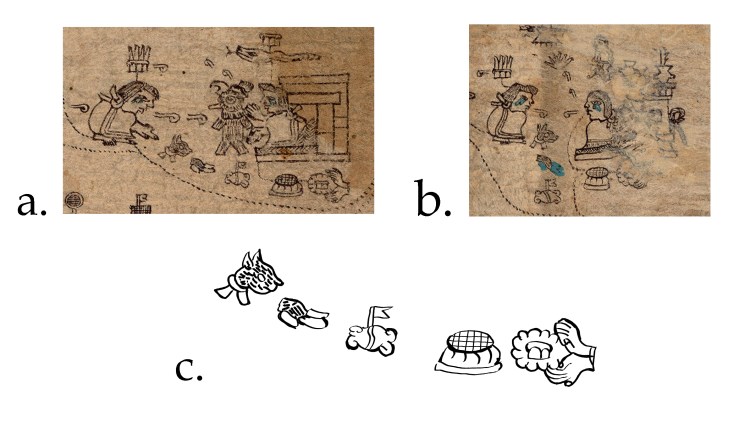
Figure 2: a) Tlatoltzin Speaks to Cohuatlitlatzin (Codex Xolotl, page 9); b) Tlatoltzin speaks to Motoliniatzin (Codex Xolotl, page 10); c) Glyphic sequence for a, which is identical in content to the one at b.
This pair of sentences accompanying both pictographs offer almost no difficulties, since most glyphs within them are well known. The preliminary reading of both would be NEZAHUAL-COYO CHOLO te-pan ? tla-TLAXCAL, Nezahualcoyo(tl o)cholo (in) Tepanecatl (…) Tlaxcala. “Nezahualcoyotl escaped from the Tepaneca (…) Tlaxcala.” The undeciphered part stands for the penultimate glyph, right before the toponym for Tlaxcala. This glyph, which looks like a dome-shaped object (Figure 2), is designated as X.090.F.32 in its first appearance by Thouvenot, and X.100.D.23 in its second one. No complete iconographic interpretation nor verbal reading for it is offered in his study, although he identifies the object at the upper part of the glyph as an ear of corn. What is this object, and what relationship does it have with the possible verbal message of this image?
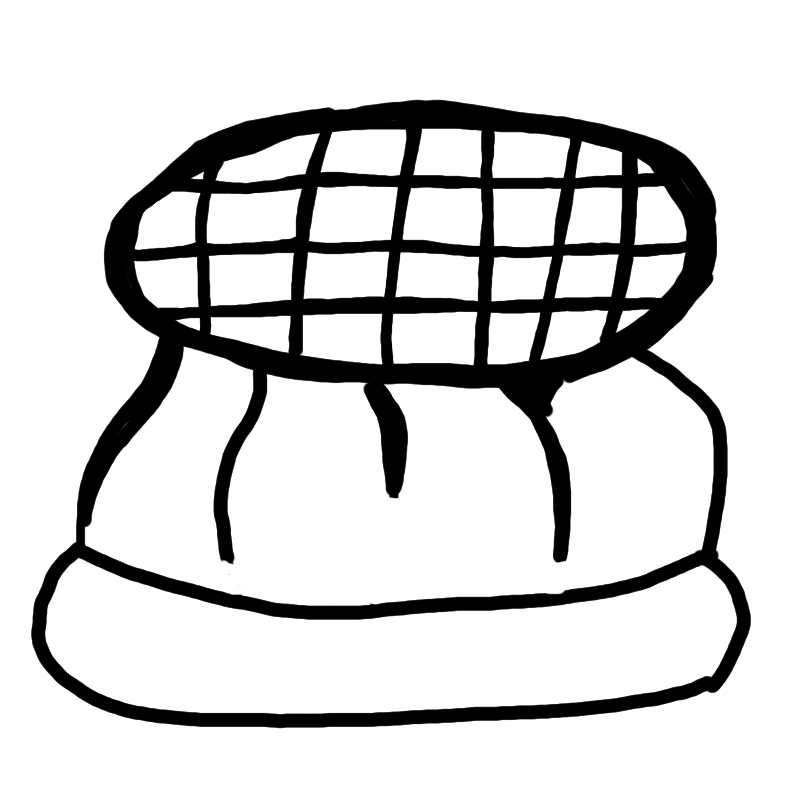
Figure 3. The undeciphered glyph in question.
Of course, Dibble’s interpretation relies on important textual parallels with Ixtlilxochitl alphabetic account of these episodes; they must be considered as firmly established. In summary, according to Ixtlilxochitl, Nezahualcoyotl ordered two of his vassals, Xolotecuhtli, and Tlatoltzin, to go to different lords in the regions of Chalco and Coatlinchan “to warn (them) that he was going to Tlaxcala and to tell them everything that has happened to him and the rest of his vassals, giving them notice of everything and asking for help”. (Ixtlilxochitl 1985: 364). We have no more information available on the matter, so we must use our extant resources, which are certainly not meager, to arrive at an interpretation.
The solution to this riddle lies in the correct iconographic interpretation of the object considered in conjunction with its possible verbal message. As suggested by the part that is already clear, the mysterious glyph must be a verb of movement that indicates Nezahualcoyotl relation to his destination, Tlaxcala. The verb must be in the past tense in the original Nahuatl message, although tenses are not often represented in Aztec writing. In any case, this verb of movement is not depicted here by the usual iconographic means in Aztec writing, that is, footprints which could indicate the verb yauh, but by a strange object. The only significant clue is that the object might be related to corn… What is it, then?
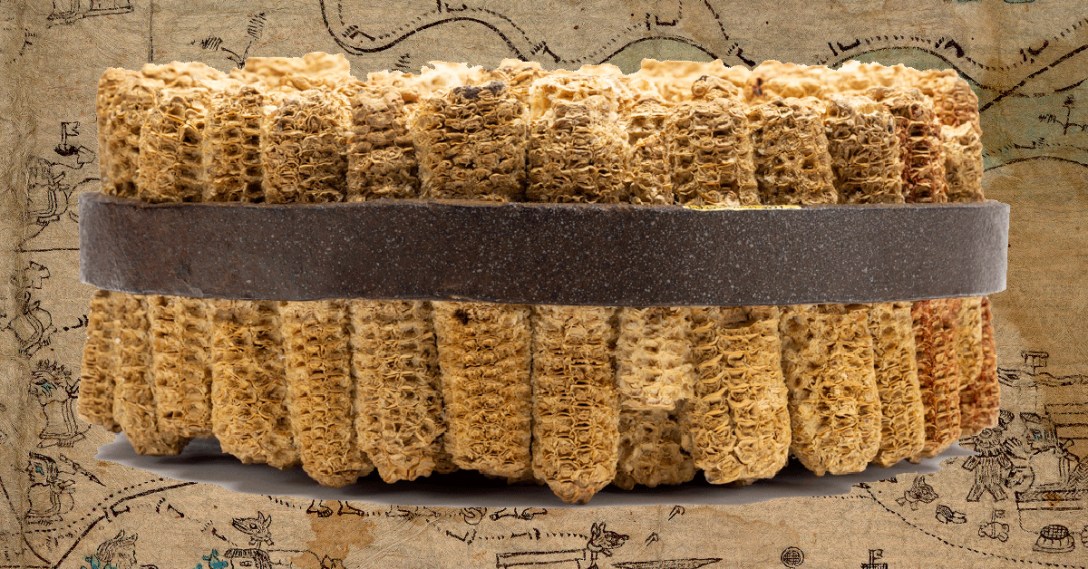
What I propose is that the object depicted here is a corn sheller or olotetzontetl, called in Spanish olotera (Figure 4). Traditionally, this object has been manufactured by binding together a number of already shelled corncobs. This offers a hard surface on which an ear of corn can be easily shelled by scraping.
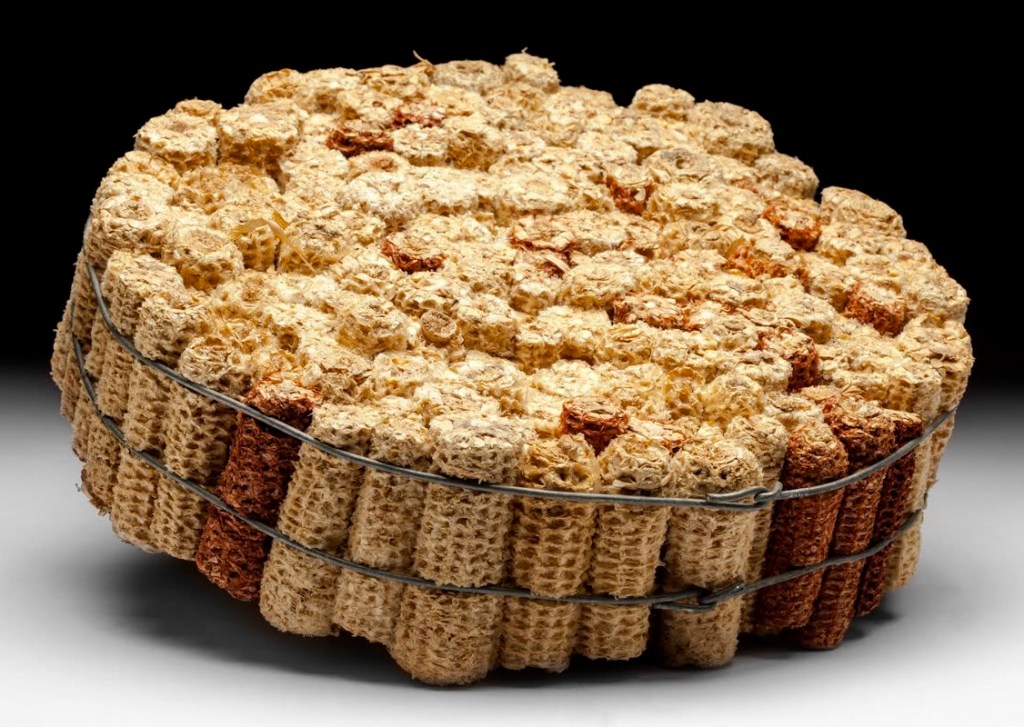
Figure 4. Modern olotera or corn sheller (
The traditional use of the olotera can be seen in video here:
To my knowledge, this object is not depicted elsewhere in the whole corpus of Aztec iconography, which made its interpretation exceedingly hard. However, now that we have an iconographic candidate, the main question remains: what is its actual reading? How is an olotera related to a verb of movement? I propose that the reading of this glyph is the verbal root oya (in Classic ortography) or ōya in modern, phonetic one, which means “to shell something (corn, peas, etc.) / desgranar” (Karttunen 1982: 180). This verbal root is almost identical to the third person preterite of the verb yauh, “to go”, which is oya, “he went” in Classical ortography, or ōyâ in the orthography of the grammarian Michel Launey (Launey 2011: 74). Since Nahuatl writing didn’t mark syllabic length nor glottal stops (Lacadena and Wichmann 2008), the logogram OYA works here as a rebus for the past tense of the irregular verb yauh, “to go”. A reading for both sequences is now possible:
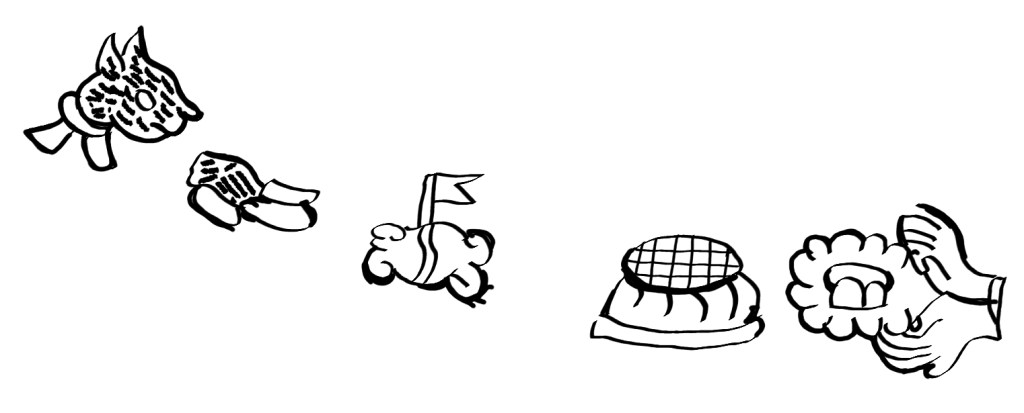
Figure 5. Glyphic sentence at Codex Xolotl 9: NEZAHUAL-COYO CHOLO te-pan OYA tla-TLAXCAL, Nezahualcoyo(tl o)cholo (in) Tepanecatl. Oya Tlaxcala, “Nezahualcoyotl escaped from the Tepaneca. He went to Tlaxcala”.
Nezahualcoyo(tl o)cholo(c in) Tepanecatl. Oya (in) Tlaxcala.“Nezahualcoyotl escaped the Tepaneca. He went to Tlaxcala.”
Of course, this means that this glyph is not only hapax, but a case of rebus. Identified by Aubin in his initial study of Aztec writing ([1884] 2002: 37), rebus is a well-known device in both puzzles and writing which uses the verbal reading of one thing and its visual depiction to mean another, like in the famous English example which depicts the verb “to be” with a bee, or depicting the word belief with a picture of a bee and a leaf. Here, the verb “to shell” or ōya, identical to the past of the third person of the verb “to go” (ōyâ ) in terms of a writing that lacks means to represent syllabic length and glottal stops, is used as a rebus, and offered as an ingenious scriptural resource that is never used again in all the extant corpus of Aztec writing. Before its obscurity, we can only marvel at the ingenuity of Aztec scribes or tlacuiloque, which probably defied and delighted their peers with such exquisite visual games, an we may as well despair at the prospect that many yet undeciphered Aztec glyphs probably present similar cases of wordplay, equal or even greater in complexity.
References
Aubin, Joseph Marius Alexis. (1884) 2002. Memorias sobre la pintura didáctica y la escritura figurativa de los antiguos mexicanos. Mexico: UNAM.
Boban, Eugene. 1891. Documents pour servir a l’Histoire du Mexique. Raisonné de la Collection de M. E. Eugcne Goupil. Paris: E. Leroux.
De Jesús Douglas, Eduardo. 2010. In the Palace of Nezahualcoyotl: Painting Manuscripts, Writing the Pre-Hispanic Past in Early Colonial Period Tezcoco, Mexico. Austin: University of Texas Press.
Dibble, Charles. 1951. Códice Xolotl. Mexico: UNAM.
Ixtlilxochitl, Fernando de Alva. 1985. Obras Históricas, volume 1. Ed. Edmundo O’Gorman. Mexico: UNAM.
Karttunen, Frances. 1982. An Analytical Dictionary of Nahuatl. Norman, OK: University of Oklahoma Press.
Lacadena, Alfonso, and Søren Wichmann. 2008. “Longitud vocálica y glotalización en la escritura jeroglífica náhuatl” Revista Española de Antropología Americana 38: 121-150.
Launey, Michel. 2011. An Introduction to Classical Nahuatl. Trans. Christopher Mackay. Oxford: Oxford University Press.
Vepretskii, Sergei, and Albert Davletshin. 2022. “A Possible [tze] Syllable and its Associates in Maya Writing”, Estudios de cultura maya, 59: 11-36.
Robertson, Donald. 1959. Mexican Manuscript Painting of the Early Colonial Period: The Metropolitan Schools. Norman, OK: Oklahoma University Press.
Thouvenot, Marc. 2012. Tlachia [online]. Editions sur Supports Informatiques <https://cen.sup-infor.com/#/home/tlachia>
Thouvenot, Marc. 1987. Códice Xolotl: Estudio de uno de los componentes de su escritura: glifos Diccionario de elementos constitutivos de los glifos. PhD Dissertation, École des hautes études en sciences sociales, Paris.
Whittaker, Gordon. 2021. Deciphering Aztec Hieroglyphs: A Guide to Nahuatl Writing. Berkeley, CA: University of California Press.

