Dissemination: “Pictorial Books from Mexico Defy our Definition of Writing”

The incredible channel Nativlang in YouTube, which concentrates on dissemination and original insights regarding writing systems in history, has uploaded an incredible video which is inspired by the research from my article “Towards a Complex Theory of Writing: The Case of Aztec and Mixtec Codices“, published in 2022 in the French journal Signata. Of course, my research is not the only source of this video, which also takes a deep inspiration from Jansen and Pérez Jiménez seminal work, especially their book The Mixtec Pictorial Manuscripts: Time, Agency and Memory in Ancient Mexico (2011). The video, called “Pictorial books from Mexico defy our definition of writing – Ñuu Dzaui pictography” is of a truly astounding quality, seemingly having taken 315 hours of work, as it animates in full colour with a very high level of visual talent some of the examples found on my article and in the work of other scholars, as well as displaying an excellent understanding of the material commented upon.

The channel NativLang is the creation of the linguist Joshua Rudder, a talented coder and animator, who is responsible for the short film Thoth’s Pill: An Animated History of Writing, also available on YouTube, as well as being the author of a number of books concentrated on the learning of different scripts for non-specialists. I am truly honoured that my work has inspired such incredible animation, and I am looking forward to watching the rest of his videos, as well as those to come. Truly a great way to end the year for this blog!

New Aztec Codices Discovered: The Codices of San Andrés Tetepilco

Yesterday, a team of specialists of the National Institute of Anthropology and History of Mexico, led by the historians Baltazar Brito Guadarrama and María Castañeda de la Paz, the philologist Michel Oudijk, and the Nahuatl specialist Rafael Tena, presented to the public the discovery of three new Aztec codices, collectively known as the Codices of San Andrés Tetepilco, formerly a part of the Culhuacan polity of Central Mexico, and nowadays located within the Iztapalapa borough in Mexico City. This is one of the most exciting and spectacular discoveries regarding codical sources in recent years, and is no doubt closely related to the topic of this blog. The discovery has been already covered by the Mexican press and explained in detail in yesterday’s presentation at the National Museum of Anthropology in Mexico City, which can be seen in Youtube. However, an English summary will be presented for the readers of this blog.

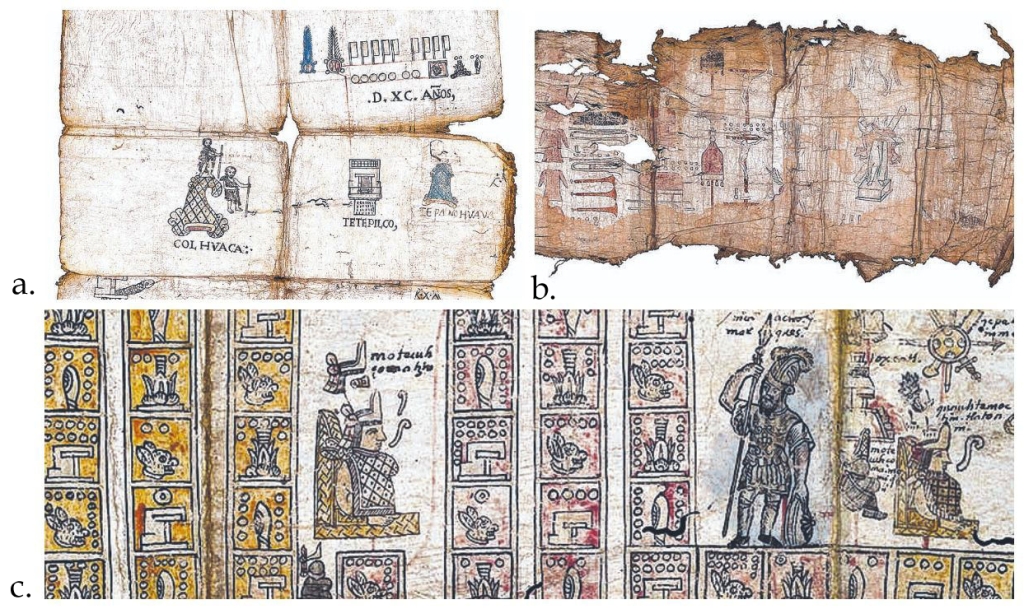
The newly discovered corpus was acquired by the Mexican government from a local family that wants to remain anonymous, but which were not collectors but rather traditional stewards of the cultural legacy of Culhuacan and Iztapalapa, and it is now stored at the library of the National Institute of Anthropology and History of Mexico. It comprises three codices. The first is called Map of the Founding of Tetepilco, and is a pictographic map which contains information regarding the foundation of San Andrés Tetepilco, as well as lists of toponyms to be found within Culhuacan, Tetepilco, Tepanohuayan, Cohuatlinchan, Xaltocan and Azcapotzalco. The second, the Inventory of the Church of San Andrés Tetepilco, is unique, as Oudijk remarks, since it is a pictographic inventory of the church of San Andrés Tetepilco, comprising two pages. Sadly, it is very damaged.

Finally, the third document, now baptised as the Tira of San Andrés Tetepilco, is a pictographic history in the vein of the Boturini and the Aubin codices, comprising historical information regarding the Tenochtitlan polity from its foundation to the year 1603. It seems to belong to the same family as the Boturini, the Aubin, the Ms. 40 and the Ms. 85 of Paris, that is to say, some of the main codices dealing with Aztec imperial history, and Brito considers it as a sort of bridge between the Boturini and the Aubin, since its pictographic style is considerably close to the early colonial one of the former, rather than the late colonial one of the latter. It comprises 20 rectangular pages of amate paper, and contains new and striking iconography, including a spectacular depiction of Hernán Cortés as a Roman soldier. In the Aztec side of things, new iconography of Moctezuma Ilhuicamina during his conquest of Tetepilco is presented (Figure 1).

Figure 1. Codices of San Andrés Tetepilco: a) Map of the Founding of San Andrés Tetepilco; b) Inventory of the Church of San Andrés Tetepilco; c) Tira of San Andrés Tetepilco

Of course, new and very interesting examples of Aztec writing are contained throughout all these documents, including old and new toponyms, spellings of Western and Aztec names, and even some information that confirms that some glyphs formerly considered as hapax, as the chi syllabogram in the spelling of the name Motelchiuhtzin in Codex Telleriano-Remensis 43r, discussed in another post of this blog, were not anomalous but possibly conventional. Besides logosyllabic spellings, the presence of pictographs with alphabetic glosses in Nahuatl will be of great help to ascertain the functioning of this still controversial part of the Aztec communication system.

In any case, the author of this blog remains expectant of the future digital and physical publication of the Codices by Baltazar Brito’s team of experts, promised yesterday, and congratulate them for their breakthrough discovery. Cheers for Aztec writing and its everlasting cultural legacy!

New Article: “Amantecayotl Glyphs Revisited”

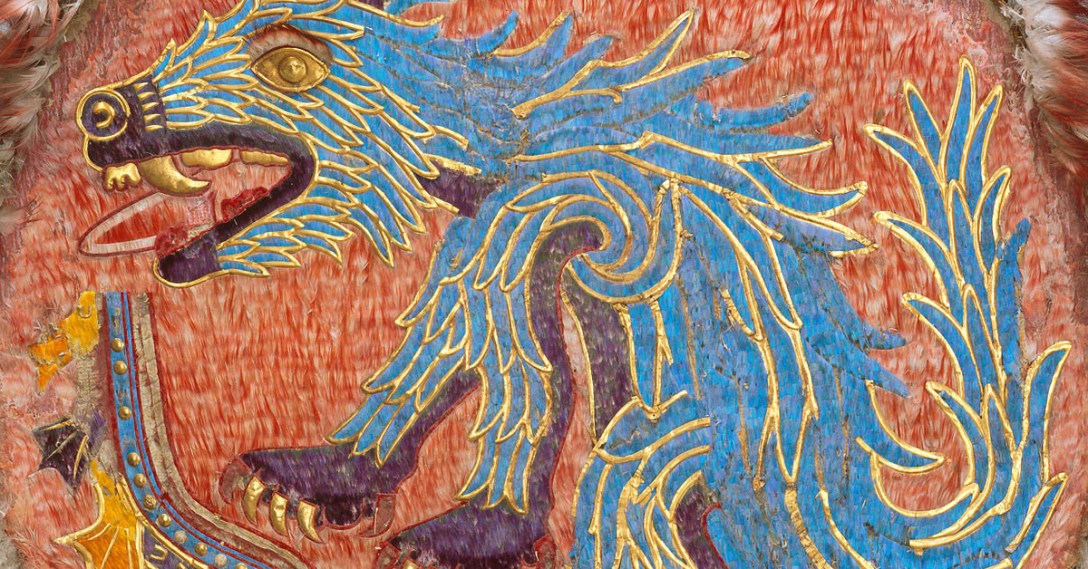
One of the obscurest and most interesting collection of glyphs within the Nahuatl hieroglyphic corpus is the one present in the 21st chapter of Book 9 of the Florentine Codex, named “Here is told how those of Amantlan, the ornamenters, performed their task” (Sahagún 1959: 93–97), glyphs which, along with images, seem to describe in detail the process of feather working by the celebrated amantecah, the Aztec feather workers. The decipherment of these glyphs has been initiated by Frances Berdan (2015); in this article, published in the journal MIRADAS – Journal for the Arts and Culture of the Américas and the Iberian Peninsula, the art historian Sanja Savkic Sebek and I present our readings for the whole section. In general, these glyphs seem to suggest that images and logosyllabic writing worked in tandem to transmit messages that sometimes coincide with the alphabetic Nahuatl text of the Florentine Codex; however, sometimes these messages seem to slightly diverge, conforming an independent text. In any case, the analysis seems to confirm the fact that Nahuatl writing cannot be wholly understood without its icono-textual context, in contrast with the idea that iconography and writing were wholly separate in the “graphic communication system” (Mikulska 2015) that was the Aztec tlacuilolli.

Link to the article in the Miradas website: https://journals.ub.uni-heidelberg.de/index.php/miradas/article/view/94236

References

Berdan, Frances. 2015. “Amantecayotl Glyphs in the Florentine Codex.” In Images Take Flight: Feather Art in Mexico and Europe, 1400–1700, eds. Alessandra Russo, Gerhard Wolf, and Diana Fane, 322–329. Munich: Hirmer.

Mikulska, Katarzyna. 2015. Tejiendo destinos. Un acercamiento al sistema de comunicación gráfica en los códices adivinatorios, Zinacantepec, México, El Colegio Mexiquense A. C.

Sahagún, Fray Bernardino de. 1959. Florentine Codex: The General History of the Things of New Spain. Book 9: The Merchants, trans. Charles E. Dibble and Arthur J. O. Anderson. Santa Fe, NM: School of American Research, University of Utah.

Zamora Corona, Alonso, and Sanja Savkic Sebek. 2023. “Amantecayotl Glyphs Revisited: Writing and Featherworking in the Florentine Codex.” MIRADAS – Journal for the Arts and Culture of the Américas and the Iberian Peninsula, Special issue Decolonial Theory, Transculturation, and Latin American Positions – Entangling Art Histories, edited by Miriam Oesterreich and Franziska Koch, 7: 29-54. doi.org/10.11588/mira.2023.1.94236.

New Article: “Towards a Complex Theory of Writing”

The discussion regarding the definition of writing, and of what Mesoamerican systems can teach us about writing in general, is fascinating, difficult, and somewhat pricklish. Ever since Ignace Gelb commited the double mistake of relegating both Aztec and Maya writing to the category of “limited systems” or “precursors of writing” (1963 [1952]: 51-59), scholars have extensively discussed on the nature of Mesoamerican writing systems, disagreeing more often than not [1]. While the field of Maya epigraphy has tended towards convergence and a state of consensus regarding the fundamentals [2], non-Maya writing systems have been the centre of a heated debate that will previsible continue unabated in the coming years [3].

The article that I link in this entry certainly won’t solve the issue and is, in many ways, nothing essentially new (despite the presence of a couple of new analyses), but I felt compelled to write it after I realised that, in a way, it is possible to theoretically reconcile both of the major perspectives in the debate (which could be vaguely named “semasiography” and “grammatology”) if different theoretical referents are used, specially non-traditional linguistics. However, in the end, I am conscious that the most important thing is not the theoretical underpinnings (theory evolves, comes and goes), but concrete issues. Thus, this article was written as a bit of a prologue to further contributions. I hope readers enjoy it, despite its faults.

Link to the electronic version: https://journals.openedition.org/signata/3866

PDF:

Notes

[1] Some milestones are: Thompson 1950, Prem and Riese 1983, Justeson and Campbell 1984, Galarza 1996, Davletshin 2002, Lacadena 2008, Thouvenot 2010, Velásquez García 2010, Boone 2011, Whittaker 2011, Mikulska 2015, 2019, Zender 2017.

[2] See Houston, Stuart and Chinchilla 2001 for an anthology on the history of Maya decipherment.

[3] See Mikulska and Offner 2019, Davletshin 2021, Whittaker 2021 for recent, contrasting points of view.

References

Boone, Elizabeth Hill. 2011. “The Cultural Category of Scripts, Signs, and Pictographies.” In Their Way of Writing: Scripts, Signs, and Pictographies in Pre-Columbian America, ed. Elizabeth Hill Boone and Gary Urton, 379–390. Washington, DC: Dumbarton Oaks Research Library and Collection.

Davletshin, Albert. 2003. Paleography of the Ancient Maya Hieroglyphic Writing, PhD dissertation, Moscow: Russian State University for the Humanities, Knorozov Center of Mesoamerican Studies (in Russian).

Davletshin, Alberto. 2021. “Descripción funcional de la escritura jeroglífica náhuatl y una lista de términos técnicos para el análisis de sus deletreos” Estudios de Cultura Náhuatl 62: 43-91.

Galarza, Joaquín. 1996. Tlacuiloa, escribir pintando. Algunas reflexiones sobre la escritura azteca. Glosario de términos. Mexico: Editorial Tava.

Gelb, Ignace Jay. 1963. A Study of Writing, 2nd edition. Chicago & London: University of Chicago Press.

Houston, Stephen, Oswaldo Fernando Chinchilla Mazariegos, and ‎David Stuart, eds. 2001. The decipherment of Ancient Maya Writing, Norman, OK: Oklahoma Press.

Lacadena, Alfonso. 2008. “Regional Scribal Traditions: Methodological Implications for the Decipherment of Nahuatl Writing.” The PARI Journal, 8 (4): 1-22.

Mikulska, Katarzyna. 2015. Tejiendo destinos. Un acercamiento al sistema de comunicación gráfica en los códices adivinatorios. Zinacantepec: El Colegio Mexiquense A. C.

Mikulska, Katarzyna, and Offner, Jerome A. 2019. Indigenous Graphic Communication Systems: A Theoretical Approach. Boulder, CO: Colorado University Press.

Prem, Hanns J., and Berthold Riese. 1983. “Autochtonous American Writing Systems: The Aztec and Maya Examples.” In Writing in Focus, ed. Florian Coulmas and Konrad Ehlich, 167–186. Berlin: Mouton.

Thompson, Eric Sidney. 1950. Maya hieroglyphic writing: an introduction. Norman, OK: University of Oklahoma Press.

Velásquez García, Erik, 2010. “Imagen y escritura en Mesoamérica”, en Ma. Teresa Uriarte (coord.), De la Antigua California al Desierto de Atacama, México, UNAM, pp. 59-84.

Whittaker, Gordon. 2009. “The Principles of Nahuatl Writing.” Göttinger Beiträge zur
Sprachwissenschaft
16: 47–81.

Whittaker, Gordon. 2021. Deciphering Aztec Hieroglyphs: A Guide to Nahuatl Writing. Berkeley, CA: University of California Press.

Zamora, Alonso. 2022. “Towards a Complex Theory of Writing.” Signata: Annales des sémiotiques 13. URL: <http://journals.openedition.org/signata/3866&gt;.

Zender, Marc. 2017. “Theory and Method in Maya Decipherment.” The PARI Journal 18 (2): 1-48.
Welcome

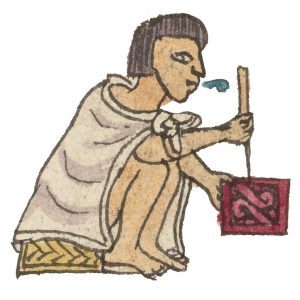
Tlacuilolli means both ‘painting’ and ‘writing’ in Nahuatl, the language of the Aztec. In a way, the problematic ambiguity implied by this word and its equivalents in other Mesoamerican languages will be the central topic of this blog. In this space I will present some of my thoughts on Mesoamerican writing systems (Aztec, Maya, Mixtec, mainly), as well as some reflections on the former and current debates on the topic. Occassionally, non-Mesoamerican record systems of the Americas will be featured here. The content presented here is provisional, since I am an independent enthusiast rather than an expert, so any feedback on it is more than welcome. More updates coming soon!